Blog
Boiler making banging noise: causes, fixes & safety tips
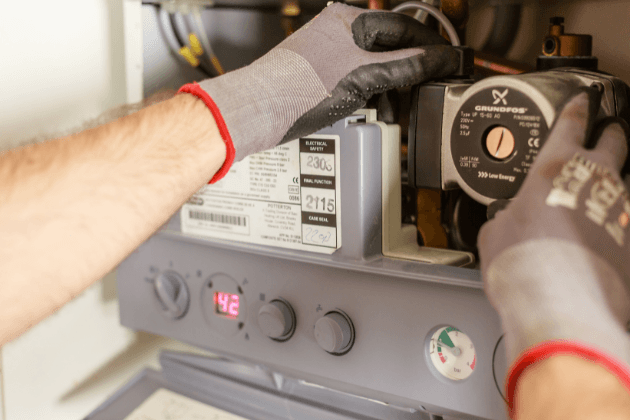
Why your boiler is making banging noise — what the sound means
If your boiler is making banging noise, it can be alarming — especially if the system has always been quiet. Banging, knocking or clanking usually signals an issue within the heating circuit. Some causes are straightforward to fix; others need a prompt visit from a qualified engineer to protect efficiency, safety and long‑term reliability.
Quick safety checks before you investigate
Prioritise safety before doing anything else. Stop and call a professional if you encounter any of the following:
- If you smell gas, turn off the gas at the meter if it is safe to do so, open windows, leave the property and call the gas emergency number.
- If you see a leak from the boiler or nearby pipework, switch the boiler off and, where possible, isolate the water supply.
- If the boiler repeatedly locks out or shows error codes, do not keep resetting it — switch it off and arrange a repair.
If any of the above apply, contact a Gas Safe registered engineer rather than attempting further diagnosis yourself.
Common causes of a boiler making banging noise
Different sounds point to different faults. The most frequent causes include:
- Kettling from limescale build‑up — Scale on the heat exchanger restricts flow and creates hot spots. Water can boil locally, forming and collapsing steam bubbles that produce a rumbling or banging sound and reduce efficiency.
- Air trapped in the system — Gurgling, glugging and intermittent knocks often mean air pockets are preventing smooth circulation.
- Low system pressure or circulation issues — Modern boilers need sufficient pressure to circulate water quietly. Low pressure, a failing pump with worn bearings, or incorrect pump speed settings can cause knocking and vibration.
- Loose pipework — Pipes that are not adequately clipped can bang as they expand and contract when heated.
- Water hammer — Fast‑closing valves (for example, some taps or toilet fill valves) can create a shock wave that produces a sharp thud or bang in the pipework.
What you can safely check yourself
You can often narrow down the problem with a few simple checks. Do not remove boiler casings or touch internal components — those jobs are for a qualified engineer.
Step 1 — Check the pressure gauge
On most combi and system boilers, cold system pressure should read roughly 1 to 1.5 bar. If the gauge is well below 1 bar, low pressure may be contributing to the noise. If your boiler manual explains the procedure and you are confident, you can gently top up the pressure using the filling loop. If pressure keeps falling, there may be a leak or internal fault requiring professional attention.
Step 2 — Inspect your radiators
With the heating on, feel radiators from bottom to top. Cold spots at the top suggest trapped air; cold areas at the bottom point to sludge or scale. If the top is cold only, bleeding that radiator often improves circulation and reduces noise. Remember to re‑check boiler pressure afterwards, as bleeding releases water as well as air.
Step 3 — Consider recent work or changes
Think about any recent changes before the noise began — radiators bled, valves replaced, or new taps/toilets fitted. Fast‑acting valves or fully closed TRVs can cause pressure surges. Try opening TRVs fully to see if the noise reduces.
Low‑risk fixes you can try
If you want to try a few household fixes, do so cautiously and stop if anything makes the noise worse:
- Lower the boiler flow temperature if this control is accessible and your manual supports it — reducing flow temperature can reduce kettling in scaled systems.
- Bleed radiators that have air at the top, then restore system pressure if needed.
- Check that TRVs and isolation valves on individual radiators or towel rails are not accidentally closed.
If these measures produce only a slight improvement or no change, arrange a professional inspection.
Problems that need a Gas Safe engineer
Certain issues must be handled by a trained engineer. Attempting them yourself can be unsafe and may void warranties. Call an engineer for:
- Kettling caused by heavy limescale on the heat exchanger — descaling or replacement may be necessary.
- Internal pump faults — noisy bearings, seized pumps or incorrect speed settings need specialist tools and parts.
- Severe sludge build‑up requiring powerflushing or chemical cleaning.
- Combustion or gas issues that require testing and adjustment.
- Pipes that need re‑clipping or additional restraints to stop movement and eliminate water hammer.
Reducing the risk of future boiler noise
After the immediate problem is resolved, ongoing maintenance will keep the system quieter and more reliable:
- Annual servicing lets a qualified engineer spot early signs of kettling, pressure faults or failing components. They can check safety devices, combustion and flue operation.
- Regular system cleaning, such as powerflushing when necessary, removes sludge and scale that cause hot spots and noisy circulation.
- Maintaining correct inhibitor levels helps slow corrosion and reduce new sludge build‑up.
Read more about the benefits of annual servicing in our guide to why annual boiler servicing is essential.
Next steps if your boiler is banging
Don’t ignore persistent banging or knocking. Start with the safe checks above, stay alert to any safety signs, and avoid repeatedly resetting a boiler that locks out. For professional help, book a boiler service or repair visit — a Gas Safe registered engineer can diagnose the cause, explain the repair options clearly and restore quiet, efficient heating.
To arrange a visit or get tailored advice, book a boiler service or contact us directly.
Book a boiler service | Explore our service plans | Contact MBW Plumbing & Heating
Other Articles