A simple, safe guide to topping up boiler pressure on a typical sealed system using the filling loop.
Blog
How to top up boiler pressure using the filling loop
MBW Plumbing & Heating
If your boiler keeps cutting out or your radiators feel cooler than usual, low pressure on a sealed system could be the reason. Topping up with the filling loop is usually straightforward, but it must be done carefully to avoid damaging your boiler.
Who this guide helps and a safety warning
This guide is for homeowners with modern sealed system or combi boilers that have a pressure gauge and a manual or built-in filling loop. It does not apply to open-vented systems with a header tank in the loft.
If you are unsure what type of system you have, stop and check your boiler manual or contact a Gas Safe engineer. Never remove boiler covers, touch gas pipes, or tamper with internal gas components. You should only be using the filling loop and isolation valves accessible from outside the boiler case.
Finding your boiler pressure gauge and ideal pressure
Before you touch the filling loop, you need to know what the current pressure is. Most sealed system boilers have either a small analogue dial with a needle or a digital display that shows the system pressure in bar.
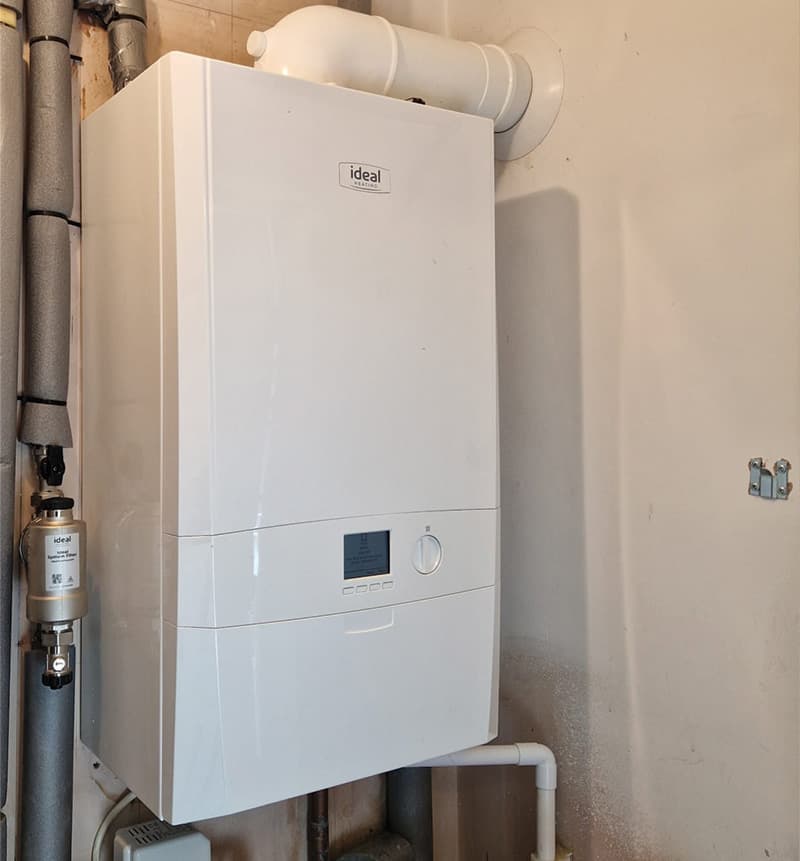
The pressure gauge is usually on the front of the boiler fascia, underneath a drop-down flap, or nearby on the pipework. If you cannot spot it straight away, check your boiler manual for an illustration or photo to guide you.
On many domestic systems, the correct cold pressure is typically around 1.0 to 1.5 bar, but this can vary. There is often a green zone on an analogue gauge that shows the normal range.
Check your boiler manual for the recommended cold pressure
Avoid going above the manufacturer’s suggested range
If in doubt, aim for the middle of the green zone, usually around 1.2 bar
Never top up to 3 bar or higher. If the pressure is already high or in a red zone, do not attempt to top up and contact a professional instead.
Understanding the filling loop
The filling loop is the part that connects your central heating system to the mains water supply so you can add water and increase the pressure. It is usually a flexible braided silver hose with a valve at each end, or a pair of small taps and a short rigid pipe beneath the boiler.
On some modern boilers there is an internal or keyed filling loop. You may need to insert a small plastic key and turn it to open the valve. Your boiler manual will show the exact setup for your model and is the best guide for identifying the right controls.
Step-by-step method to top up boiler pressure
Work through these steps slowly and do not rush. If anything does not match what you see, stop and get advice from a Gas Safe engineer.
1. Turn the heating off and let the system cool
Switch the boiler and central heating off using the controls on the boiler or your room thermostat. Wait at least 30 minutes so the water in the system cools down and the pressure reading settles.
Topping up when the system is hot can give an incorrect reading and makes it easier to accidentally overfill.
2. Confirm the current pressure
Check the pressure gauge once the boiler has cooled. If it is below the recommended cold pressure range in your manual, you can top it up using the filling loop.
If the gauge reads zero or close to it, or if any error codes are showing, it is safer to call an engineer. Very low pressure can mean there is a significant leak or another fault.
3. Locate the filling loop and valves
Find the flexible or rigid pipe that links the cold mains supply to the heating circuit. You should see two small valves or taps, typically with black or blue handles, flat screwdriver slots, or quarter-turn levers.
Both valves should normally be in the closed position. On lever types, the handle in line with the pipe is usually open and across the pipe is closed, but check any markings and your manual to be sure.
4. Open the valves slowly to add pressure
Place yourself where you can clearly see the pressure gauge while you operate the valves. Turn the first valve slowly to the open position, then gently open the second.
You may hear water flowing. Watch the pressure gauge rise. This can move quite quickly, so be ready to close the valves as you approach the target pressure.
5. Close the valves at the correct pressure
As the needle or digital reading reaches the recommended cold pressure (for many homes, around 1.0 to 1.5 bar), close both valves firmly. Avoid overshooting the target by adding pressure in short bursts rather than all at once.
Once the valves are shut, the sound of running water should stop. Double check both valves are fully closed by gently trying to turn them a little further without forcing them.
6. Restart the boiler and recheck
Turn the boiler and heating back on and let the system run for 10 to 20 minutes. The pressure will usually rise slightly as the water heats and expands.
Check the gauge again. It should stay within the safe operating range in your manual. If it climbs towards 3 bar or you see water dripping from the pressure relief pipe outside, turn the boiler off and call an engineer.
What to do if the pressure misbehaves
If the pressure will not rise
If the gauge does not move when both filling loop valves are open, first confirm that the mains water supply is on and working at your taps. Next, check that both valves are truly in the open position and not stuck.
If you still cannot raise the pressure, do not keep trying. There could be a blockage or a fault with the filling loop or internal components and you will need a heating engineer to investigate.
If the pressure rises too quickly
If the pressure needle shoots up very fast, close both valves immediately. You can then open them again, but only slightly, so water flows more slowly.
It is better to spend an extra minute topping up gently than to over-pressurise the system. Never walk away while the filling loop is open.
If the pressure drops again straight away
When pressure falls back down soon after topping up, there is usually an underlying problem. This might be a visible leak on a radiator, valve, or pipe, or an issue inside the boiler such as a faulty expansion vessel.
Walk around your home and look for damp patches, green or white staining on pipes, or water under radiators. Also check the copper pressure relief discharge pipe outside; if water drips from this, the system may be losing water through the safety valve.
When to book a repair instead of topping up
Occasional small top-ups, perhaps once or twice a year, can be normal on some systems. However, needing to refill every few weeks or days is a sign something is wrong.
Repeated loss of pressure despite topping up correctly
Visible leaks or staining around pipework and radiators
Discharge pipe outside dripping, especially when the heating is on
Pressure climbing very high when the system heats up
If you notice any of these, it is time to call a Gas Safe registered engineer to find and fix the root cause rather than just adding more water.
FAQ notes for your engineer or website
Where is my filling loop?
In most homes the filling loop is under the boiler, connected to the pipework, or near the hot water cylinder on a system boiler. Check your manual for an illustration; a photo on your website could show different common locations to help homeowners recognise what they have.
Is it dangerous to top up boiler pressure?
Using the external filling loop exactly as described in your boiler manual is usually safe for a confident homeowner. The danger comes from over-pressurising, ignoring leaks, or interfering with gas components or internal parts you are not qualified to work on.
If you feel unsure at any point, stop, leave the boiler switched off, and arrange a visit from a professional.
Need help with boiler pressure issues?
Topping up via the filling loop should be a simple, occasional task, not a constant battle with a misbehaving boiler. If the pressure keeps dropping, the gauge readings worry you, or you would rather have a professional handle it, help is close at hand.
For friendly, expert support with boiler pressure problems, boiler repairs, and boiler servicing, contact MBW Plumbing & Heating on 07712508313. A qualified engineer can safely diagnose the cause and get your heating working reliably again.
Other Articles