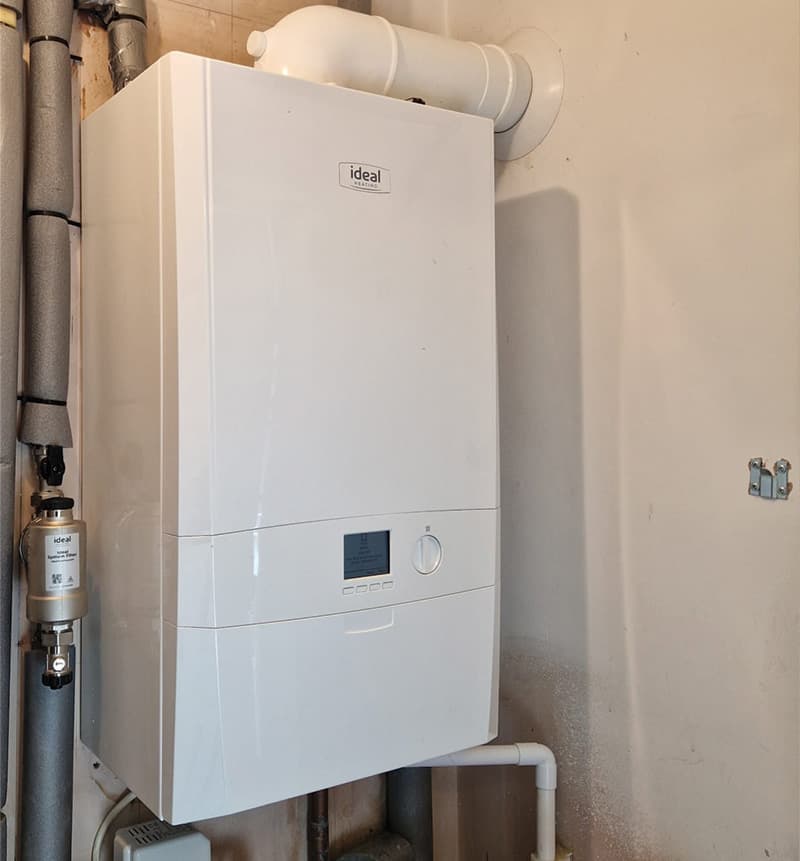
A frozen condensate pipe can stop a modern boiler, but careful thawing and a few preventative improvements can often restore heating safely.
Blog
Frozen condensate pipe? Safe steps to get heating back
MBW Plumbing & Heating

A frozen condensate pipe is a common reason for a modern boiler to stop working during colder spells in Hampshire. The good news is that, if the issue is outside the boiler and you can identify it safely, gentle thawing may get your heating and hot water running again without delay.
However, it is important to avoid risky shortcuts. Never remove the boiler casing or use a naked flame, and contact a qualified heating engineer if you are unsure at any stage.
What the condensate pipe does
A condensing boiler produces water as it operates efficiently. This slightly acidic wastewater leaves the boiler through a condensate pipe, which usually runs to a household drain or an external gully. Many installations have a section of plastic pipe outside, where it can be exposed to freezing temperatures.
Freezing is more likely when the external section is long, narrow, poorly insulated or positioned in a particularly cold area. Water trapped inside turns to ice, creating a blockage. The boiler then detects that condensate cannot drain and shuts down to protect itself.
Signs your condensate pipe may be frozen
A boiler affected by a frozen pipe may make a gurgling, bubbling or trickling sound before locking out. You may also notice that the heating and hot water stop, while the display shows a fault or a flashing warning light.
Fault messages vary between manufacturers and models. They may relate to condensate, drainage, water flow or a general safety lockout, while some boilers display ignition or flame-related fault-code families when the shutdown affects the start-up sequence. Check your manual for the meaning of the message, but do not repeatedly reset the boiler if the fault returns.
Gurgling or bubbling noises during an attempted start-up
A boiler lockout, warning light or fault message
No heating or hot water despite power being available
A frozen-looking external condensate pipe or outlet
Safe steps to thaw the pipe
Before starting, make sure you can reach the external condensate pipe safely from ground level. It is commonly a white or black plastic pipe leaving the boiler and passing through an outside wall to a drain or gully. Do not climb onto roofs, balance on unsafe surfaces or interfere with any gas, oil or electrical components.
Switch the boiler off using its controls and allow it to stop attempting to fire.
Find the exposed condensate pipe and identify the likely frozen section, usually near the outlet or where the pipe passes into a drain.
Apply warm, not boiling, water to the pipe. Pour it slowly over the suspected blockage, or hold a hot water bottle against the pipe for several minutes.
Start at the outlet end and work back towards the boiler. This helps melted ice and water escape rather than pushing more water into a blockage.
Wait for the pipe to clear fully, then wipe away excess water so it cannot freeze around the outlet again.
Restore the boiler’s power and follow the manufacturer’s normal reset procedure once. If it starts, monitor it and check that condensate is draining correctly.
Use several applications of warm water if needed, allowing time between each one. Do not use boiling water because sudden heat can damage plastic pipework, and never use a blowtorch, lighter, heat gun or any other open flame.
When professional help is needed
If the boiler remains locked out after the pipe has thawed, the blockage may be further along the drain, or the boiler may have another fault. A persistent lockout can also indicate an issue with a pump, sensor, fan or condensate trap, which should be assessed by a qualified engineer.
Do not dismantle the boiler casing. Internal components can remain dangerous even when the controls appear switched off, and gas or oil appliances should only be opened and repaired by an appropriately qualified professional. If you smell gas, leave the property and follow the emergency guidance for your area.
Preventing another frozen pipe
Once the immediate problem is resolved, ask an engineer to assess the condensate installation. External sections should be properly insulated with suitable weather-resistant insulation, with particular attention paid to joints and the outlet.
Where practical, rerouting the pipe internally or into a warmer, protected location can reduce the risk substantially. For external runs, increasing the pipe diameter may also help, as a wider pipe is less likely to freeze solid. The correct arrangement depends on the boiler and drainage layout, so changes should be completed by a competent heating professional.
Regular boiler servicing is another sensible precaution. A service can identify poor condensate routing, damaged insulation and drainage problems before colder weather arrives. During colder Hampshire spells, keep an eye on exposed pipework and respond promptly to unusual noises or early warning messages.
Get your heating working safely
A frozen condensate pipe is often straightforward to thaw, but repeated lockouts should not be ignored. For guidance on restarting your system, read our reset boiler guide, or see our gas boiler repair and oil boiler repair services.
If your boiler keeps locking out or you would rather have the problem checked professionally, contact MBW Plumbing & Heating on 07712508313 to arrange a repair.
Other Articles