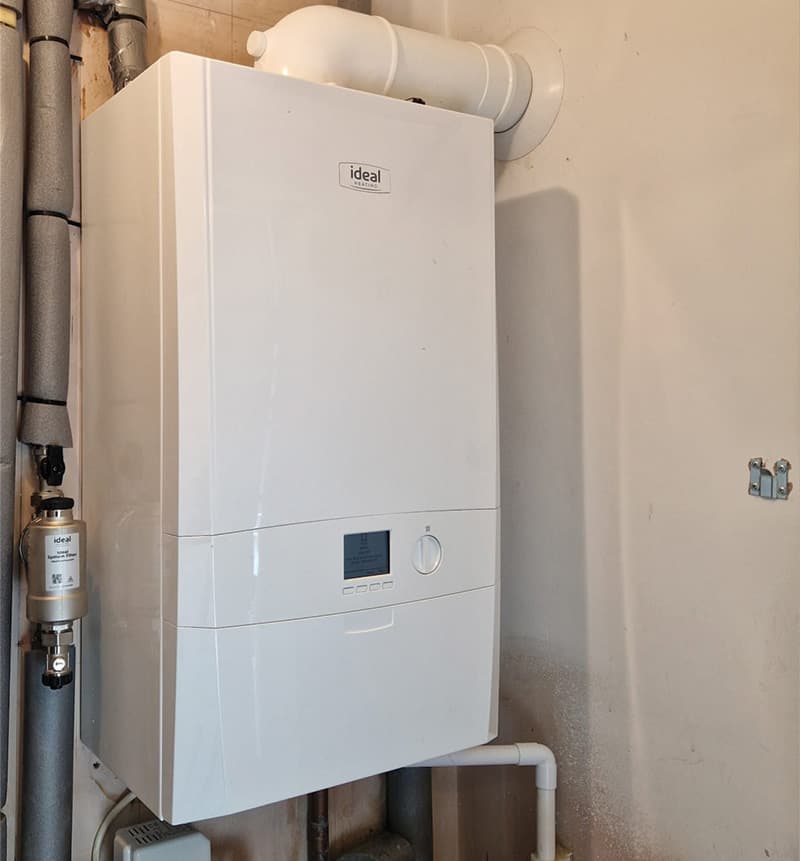
The safe checks to make when your oil boiler won't start, and the signs it's time to call an engineer.
Blog
Oil Boiler Not Firing Up? What to Check Before You Call
MBW Plumbing & Heating
If your oil boiler won't fire up, the most common reasons are an empty or nearly empty tank, a problem with the power or controls, or the boiler's safety system shutting it down (called a lockout). The first two you can often check and sort yourself. A lockout that keeps coming back needs an OFTEC-registered technician.
This post covers what each cause looks like, the checks you can safely make, and when to stop and get help. You can look at your tank, your controls and the reset button, but never take the casing off the boiler or try to adjust the burner. Inside are hot parts, live electrics and pressurised fuel.
How an oil boiler starts
When your heating or hot water calls for heat, the boiler's burner pumps a fine spray of kerosene through a small nozzle, a spark lights it, and a sensor checks there's a flame. If the sensor doesn't see a flame within a few seconds, the boiler stops and locks itself out. That's a safety feature: it stops unburnt oil building up inside the boiler.
So "won't fire up" usually means one of three things. No oil is reaching the burner, the boiler isn't being asked to start, or it tried, failed and locked out.
Check the oil tank first
It sounds obvious, but running low is the single most common reason an oil boiler stops, especially in the first cold weeks of the year, when it's working harder than it has for months.
Read the gauge. Most tanks have a sight tube or a dial on the side or top. If yours has a remote monitor in the house, check the tank itself as well, because monitors can be wrong.
If the tank is empty or nearly empty, order oil before doing anything else. Pressing reset on an empty tank won't help.
After a delivery, leave the tank to settle for about an hour before trying the boiler. Water and sludge collect at the bottom of every oil tank, and a delivery stirs them up. Drawn into the fuel line, they can block the filter.
If the tank ran completely dry, air may have got into the fuel line. Some boilers clear this on their own after a couple of attempts, but often the line needs bleeding and the filter checking. That's a job for a technician, as it means opening the fuel system.
Check the power and controls
If there's oil in the tank, make sure the boiler is actually being asked to come on:
Check the switch for the boiler, usually a fused spur (a wall switch with a fuse in it) close by, is on, and any light on it is lit.
Check your programmer or timer is set to an "on" period, or switch it to constant for a few minutes.
Turn your room thermostat up a few degrees above the room temperature.
If your home had a power cut, check the programmer hasn't lost its time or settings.
If nothing lights up on the boiler at all, check your fuse box for a tripped switch. If it trips again when you reset it, leave it off and call an electrician or heating engineer.
Using the reset button safely
Most oil boilers have a red reset button on the burner's control box, sometimes behind a small flap in the casing that's designed to be opened. A lit red button or light usually means the boiler has locked out.
If you've checked the tank and the controls:
Press the reset button once and let go.
Give the boiler a minute or two to try to light.
If it fires and stays running, keep an eye on it over the next day.
If it locks out again, don't keep pressing reset. Each failed attempt can leave a little unburnt oil in the combustion chamber, and repeated attempts can build up enough to cause a puff of smoke, soot, or a small fire when it finally lights. Our guide on how to reset a boiler safely explains more about when a reset is and isn't the right move.
Other things that stop an oil boiler
If the tank and controls are fine and the boiler keeps locking out, the cause is usually inside the burner or fuel system:
A blocked fuel filter or nozzle, often from sludge in the tank or a missed service.
A faulty photocell, the sensor that checks for a flame. If it's dirty or failing, the boiler can't see its own flame.
A worn electrode or ignition fault, so the spark doesn't light the oil.
A tripped fire valve, a safety valve on the oil supply that closes if it detects heat near the boiler.
A frozen condensate pipe on a condensing oil boiler in cold weather. Our post on a frozen condensate pipe covers the safe way to thaw it.
All of these, apart from the condensate pipe, need an OFTEC-registered technician. OFTEC is the body that trains and registers engineers who work on oil heating, much as Gas Safe does for gas.
When to stop and call straight away
Switch the boiler off at the switch and call for help if you notice:
a smell of oil, smoke or fumes near the boiler
black soot around the boiler, the flue or the burner
oil leaking from the boiler, the pipework or the tank
a loud bang or rumble when it tries to light
your carbon monoxide alarm going off. If it does, switch the boiler off, open doors and windows, get everyone outside into fresh air, and get medical help if anyone feels dizzy, sick or drowsy.
Oil boilers can produce carbon monoxide, so you should have a working CO alarm in the same room as the boiler.
Preventing it next time
Many oil boiler breakdowns trace back to the fuel: a tank allowed to run low, sludge in the filter, or a burner that hasn't been cleaned. Keeping your tank above a quarter full through the winter, and having the boiler serviced every year, prevents most of them. An oil boiler service includes cleaning the burner, replacing the fuel filter, a combustion test and a check of the tank and its pipework.
Getting your oil boiler back on
If your oil boiler still won’t fire after these checks, or keeps locking out, call MBW Plumbing & Heating on 07712508313 for advice or to book a repair visit.
Our OFTEC-registered engineers will check the burner, fuel supply and tank in one visit, find the underlying cause and tell you whether a repair or a wider service is needed. Find out more about our oil boiler repair
Other Articles